Monday, November 30, 2009

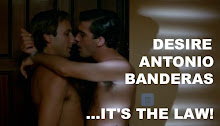
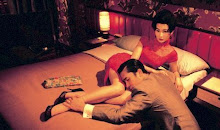
Embracing Broken Embraces


"Films have to be finished. Even if you do it blindly."


I pity the blind who will never see Broken Embraces. Pedro's latest is a ravishing, opulent ode to filmmaking as a collective of transcendent imagery and holy moments captured in time. Love, passions, desire, secrets and lies are all filtered through Almodóvar's glorious lens and rich tapestry of characters experiencing emotional paralysis as a way to disguise their beautiful bleeding hearts. Broken Embraces is an art film about the art of film -- one that etches its feeling and imagery into the memory like that of a past lover. Exquisite and painful, but you'll want to return to that time and place again and again.

Monday, November 23, 2009

I Thought Nought: Te Adoro Pedro


The decade's almost over. Me talking about it? That's only just begun!

Moments and Thoughts on the Best of the Noughts...


Bad Education (2004)
Directed by: Pedro Almodóvar


"Forgive me Father for you have sinned,
and I've sold it as a screenplay."


Dark material such as child sexual abuse, murder, drug addiction, suicide, the rape of the unconscious... it's all somehow loftier and luxurious in the hands of Pedro Almodóvar. He deepens his characters and situations to the point of moral suspect but finds in each a poignancy and fresh, provocative angle. His themes are often circular, his fascinations a constant, and somehow his work still evolves effortlessly and unexpectedly. Sexy, soulful, eye-searing cinema with a hefty dose of Spanish seasoning.


Three of the decade's finest films from one of our finest auteurs. With Talk to Her (2002) Almodóvar breathed life and cinematic language into the story of two comatose women and the men who cling to them. With Bad Education he found all the buried guilt and bubbling homoeroticism in both the cinema and the Catholic church. In Volver (2006) he unraveled the ties that bind women as they seek to reconnect even after death, and clear out their deep freeze to make room for the corpses of dastardly men. Each of these show new levels of maturity and technical marvel, remarkable nuance and filmmaking at its most passionate. For vivid emotions and visual splendor, Viva Pedro!


--more I Thought Nought (Best of the Decade) entries here

Thursday, November 19, 2009

All the Ladies Like Retro Posters!


"The dream house that becomes a nightmare..."

When you burst into song and through your picture window.


(Sweet Suzy)

"...She ain't no lady!"

...But Russ Meyer will still exploit her breasts.


(Lady Street Fighter)

A real lady street fighter would
curtsy before using her lead pipe.


...And yet she still bothers to cover her eyes?


You can't get that through customs.


(Splatter University)

"Where the School Colors are Blood Red..."

And you have even less a chance at a post-graduate career.

Friday, November 13, 2009

I Thought Nought: Social Progress and Secret Pudding


The decade's almost over. Me talking about it? That's only just begun!


Moments and Thoughts on the Best of the Noughts...


Far From Heaven (2002)
Directed by: Todd Haynes

All That Heaven Allows are stifled suburban housewives. Written on the Wind are racial epithets and gay slurs. For Cathy Whitaker it's all but an Imitation of Life.


Raymond:
I've learned my lesson about mixing in other worlds. I've seen the sparks fly. All kinds.

Amidst Todd Haynes sumptuous Technicolor tragedy lies a melancholy truth about the limits and lies of progress. Cathy Whitaker (Julianne Moore), a homemaker and the Mrs. to Mr. and Mrs. Magnatech, strives to greet her surroundings with a quiet wisdom and sympathy for her fellow man. Praised for her "kindness to negroes" and homosexuals, Cathy's caught amidst a slow changing tide -- one that has her longing for her gardener and mourning her husband's late night walks. Her lovely and manicured life lays waste to untapped passions and an unsettling silence to underpin all of those stirring orchestral melodies.


Melodrama, a mostly dead genre in its classic form, is given soulful new life through Haynes, who manages to invite truth and heartache into the accepted artifice in which the genre so often soars. As much as it works as a lost Sirkian melodrama, it's also an ornately constructed ode to said films in all their cinematic purity. Key to this is Julianne Moore's exquisitely balanced performance -- one of hers and the decade's absolute finest. Masterfully and vividly she breathes life into a a character that could so easily be another stylistic element. Hayne's collaborations with Moore have yielded some of her most haunting and beautiful performances. Her careful construction of the fragile but forward thinking Cathy shows each ache and crumble behind her brilliant facade.


Matched with Edward Lachman's eye-poppingly lush visual palette and Elmer Bernstein's pitch-perfect score, Far From Heaven is about as close to cinematic heights as it gets.


Punch-Drunk Love (2002)
Directed by: Paul Thomas Anderson


Barry:
I didn't ask for a shrink -- that must've been somebody else. Also, that pudding isn't mine. Also, I'm wearing this suit today because I had a very important meeting this morning and I don't have a crying problem.

Punch-Drunk Love is PT Anderson's "secret pudding," if you will. Bizarre ingredients underplayed and overshadowed by Anderson's more grand and far-reaching masterworks like Boogie Nights, Magnolia and There Will Be Blood (another of the decade's best concoctions). Its eccentricities and technical innovation swirl about the lonely existence of the enraged Barry, whose life is spent selling toilet plungers and stumbling through phone sex lines looking for a love connection. Once he finds that connection with the lovely Lena, their romance plays to the offbeat tune of a harmonium dropped from the heavens.


Anderson finds in Adam Sandler an oddball splendor unexpected in his days of Happy Gilmore, and a perfect muse in the tender sweetness of Emily Watson. While Jon Brion's score plunks and symphonies with each manic moment of Barry's morose existence, Anderson's visuals take on an otherworldly quality -- blinding light gives way to streams of color, echoing Barry's newfound passion and a reason for collecting all those Healthy Choice Frequent Flier Miles. Modern love stories rarely feel so unique and so genuine. Punch-Drunk Love leaves one dizzy, seeing stars -- overcome with a strange sensation to quell those years of silent rage. Anderson continues to be a director I'll follow just about anywhere.

Barry: I'm so sorry. I'm so sorry I left you at the hospital. I called a phone sex line -- I called a phone sex line before I met you, and four blonde brothers came after me. And they hurt you and I'm sorry. And then I had to leave again because I wanted to make sure you never got hurt again. And I have a lot of pudding. And in six to eight weeks it can be redeemed -- so if you could just give me that much time, I think I can get enough mileage to go with you wherever you have to go -- if you have to travel, for your work. Because I don't want to be anywhere without you. So could you just let me redeem the mileage? If you just give me six to eight weeks I can redeem the mileage and I can go with you wherever you have to travel.

"Here we go..."

Tuesday, November 10, 2009

Are You Feeling Lucky, Punks?


My lengthy absence wasn't about a lack of inspiration, laziness or lackluster cinema. It was all about luck.

Luck in the form of employment! Luck in the form of actual paid employment!


I just finished work on the new movie LUCKY from director Gil Cates Jr., filmed on location in Council Bluffs, Iowa, Omaha, Nebraska and Malibu, California. The film is a dark comedy following a serial killer who wins the lottery. Big money, big pile of dead girls.

It stars the genuine (!) talents of Colin Hanks, Ari Graynor, Jeffrey Tambor, Mimi Rogers, and the legendary Ann-Margret. A jaw-dropping cast, mind-blowing crew, and the best job you could ever ask for. It was just like winning the lottery... without the body count.


"Bye bye Ann-Margret. I'm gonna miss you so..."

Monday, September 7, 2009

Cult Oddities: Just Before Dawn (1981)


The Oregon wilderness is the perfect locale for sightseeing, camping, hiking and inbreeding. Pitch a tent, pack a whistle, and heed the advice of the drunk locals: there are most definitely "demons" on this majestic mountain. Deer hunting season's over, but the season for hunting humans begins Just Before Dawn.


Jeff Lieberman's (Squirm, Blue Sunshine) ode to hillbilly horror is a taut and underrated thriller; a film that makes inbred kin like Wrong Turn live up to its title. Both films take their backwoods brawling into the trees, but Just Before Dawn reaches higher and has stronger footing. Lieberman's awareness of slasher movie tropes allow him to cleverly and consistently subvert his suspense scenes. For a film that is in many ways true to form, it actually has its share of legitimate surprise. Dual killers, admirably restrained slaughter, and an atmospheric sense of claustrophobia and dread that lingers amidst the wide open spaces.

Five friends climb the treacherous peaks looking for a weekend escape, but soon spend their weekend planning their escape. Composer Brad Fiedel's (The Terminator) essential, eerie and minimalist soundtrack sets the tone with a haunting, whistling echo calling from the mountainside, luring our naive young fodder into nature's nihilistic trap.


Essentially the film's villains, known only as The Mountain Twins (John Hunsaker), are mindless madmen. They're prone to kill based on nothing more than proximity. It's a marvel then that the film paints them as hefty, dumb country rednecks and still manages to give them a sense of force and fearfulness. It's a bit like doubling Jason Voorhees and adding a bit of incest to his genetic makeup. But as doomed traveler Warren (Gregg Henry) notes at the film's offset, "Where we're going is no summer camp." Camp Crystal Lake was always the place to go if you wanted to see teenagers getting laid, but even they'd frown on making it with your bunkmate if she was your sister. Just Before Dawn has fun with its psychopathic slice-and-dice formula, and these psychos seems to be having fun as well.

It's obvious that these young adults are inexperienced climbers, but you wouldn't necessarily know that they're inexperienced actors. The ill-fated friends are mostly likable, well performed, and less based in stereotypes than is the slasher movie custom; no meathead jock, and even the slutty best friend never sees the softer side of her sleeping bag. There's some nice coloring to the demented local color. Our final girl's arc isn't charted through her revelatory dialogue but the length of her pants and the volume of her hair. Connie (Deborah Benson) is the equivalent of Deliverance's Jon Voight in hot pants.


Connie's evolution is one the film's most confounding but classic elements. She's a strong-minded and experienced climber, fearful of disrupting the peaceful calm of the surrounding nature, yet who becomes immediately frazzled when faced with ominous rustlings and shadowy figures in the night. Connie stands numb of fear while her vain and freewheeling girlfriend is most willing to step up to their defense. Rattled and enraged with herself, Connie describes her moment of weakness, "Megan took the knife, she didn't just sit there.... But Megan! I mean I go camping all the time. I know how to pitch a tent, I know how to start a fire, and I couldn't pick up the knife. " Connie sees the error in her ways and soon enough she's decked out in Megan's Cadillac red nail polish, turning from schoolmarm to sexpot in a matter of minutes -- ready to do whatever it takes to survive the hours just before dawn. Her character makeover is complimented by her character's makeover.

"You never know who you might run into up here."


Rather than sticking to the old adage where the horror heroine survives because she lacks the promiscuity of her pals, Connie sheds her reserved demeanor for something more sensual, but never does the film equate that with her downfall. For Connie her sexuality doesn't equal her death, rather her empowerment. Her technique for deep throating is ultimately what saves her life.


For a film that was devised as your run-of-the mill dead horny youngins' slasher flick, Just Before Dawn is decidedly less interested in punishing morality tales. Its focus is on simple suspense and savage survival; man (or be that ALL woman) versus nature. At odds with mother nature are five young people who've never had the chance to hone their primal instincts. And even more at odds are the inbred twins that overpopulate the region.

"Maybe something in the water...?"


"...Or maybe something to do with making it with your sister."


Double your pleasure, double your fun. Whatever gets you through the night.

Tuesday, September 1, 2009

A Signature Distraction


Anyone still reading Club Silencio knows that I (in)frequently contribute to Film Experience a series called "Signatures:" my most beloved actresses momentarily captured in awkward still photos and overindulgent praise. If I were to write a "Signatures" on myself, it would be that I laugh in the face of being prolific, and that my readers are lovely, patient and/or bored.

Here's my latest output/distraction, and look forward to more Defensive Cinema and Cult Oddities in the coming week!

  • Patricia Clarkson is one of the finest supporting actresses alive, so why is she never supportive?
  • Uma Thurman is out for blood in the most charming way imaginable.


  • (Literally) brace yourselves for the bitter comedy stylings of Lisa Kudrow!
  • Laura Dern is our guiding light through the darkness of monogamy, prostitution and Nicolas Cage.

Sunday, August 30, 2009

Lovely, Still, Trailer, Watch


This is the trailer for Nik Fackler's debut film Lovely, Still. It's a new holiday fable about finding love in the twilight years, starring legends Ellen Burstyn and Martin Landau. I worked on the film crew and am proud to say the trailer hits well on the film's fantastical flights of fancy and sweet sentimental side. Even if I hadn't worked on it, I'd still be curious to see it. Drop your hardworn exterior at the door and embrace the Christmas spirit!

Monday, August 17, 2009

Defensive Cinema #5: Marie Antoinette (2006)


Defensive Cinema is a series devoted to films seemingly dismissed by the greater population. And me getting all defensive like and telling you why my opinions hold more water than yours.


"I want to be forgotten,
and I don't want to be reminded."

'What Ever Happened' - The Strokes


The youthful girls of Sofia Coppola's films simultaneously try to escape and thrive in their environments. The Lisbon sisters of The Virgin Suicides laze about in hazy daydreams set to records steeped in longing as they pray for saviors to a stifling homelife. Charlotte of Lost In Translation plans a literal escape attempt while forging a connection that could sustain her through an overcrowded isolation. Coppola successfully finds a similar side to Marie Antoinette. We witness a child thrust into a political power position at its most lavish. Instant pleasure everywhere but in her arranged marriage.


"The problem of leisure...
What to do for pleasure?"

'Natural's Not In It' - Gang of Four


A marriage to a king who would rather make keys than an heir is a good starting point. Marie's pregnancy alone is held as a point of uniting families and countries. If she can't conceive of a male child to carry on the legacy, she's failed as a woman and someone of her high position. And yet we remember her best throughout history for, "Let them eat cake." Good comedic timing was clearly one of Marie Antoinette's best features, to compliment her stylish boots and hairstyles that would cripple a woman of weaker pedigree.


Marie Antoinette (Kirsten Dunst) has a celebrity experience not dissimilar to those of current times: a breakthrough ingenue with an adoring public, but give it some time and she's lucky to be harassed by a torch-wielding mob. Here a historically maligned woman is given second glance at the level of humanity that floods all of Coppola's work. Her portrait is sympathetic, loose of the historical staples, free in form and function. Her films dissolve into maturity as they progress, much like the females at their center, and gain unexpected emotional weight given their ethereal atmospherics at times. Amidst all that costumed drama, Coppola defies labels and tone in order to make a biopic of real value. It's one thing to tread a historical timeline and define a figure through their era, it's another thing to have their purpose really reflect modern dilemmas. She finds the soul in someone skewed by history as not having one.


"Rousseau says, 'If we assume man has been corrupted by an artificial civilization, what is the natural state? The state of nature from which he has been removed? Imagine wandering up and down the forest, without industry, without speech and without home.'"

Decadence becomes Marie's temporary satisfaction and means of escape, and she distracts herself with the childish gossip that stretches the vast hallways of Versailles. But as she grows and evolves, so does the film. Once Marie finally fulfills her role of baring children, she's then condemned for living amidst the very luxury she'd been ritualistically forced into. The ravishing work of Coppola, cinematographer Lance Acord and costume designer Milena Canonero, has a poignantly subtle way of placing Marie at odds with her environment -- always the center of focus but almost indiscernible from her surroundings. In an attempt to blend into her world, she's consumed by it.


Marie's eventual end doesn't leave us with the bitterness of her real-life beheading, instead her withdrawal into nature and a solemn acceptance of her fate. She sacrificially bows to her public and fades into the sunset. It's a period-piece at its most feeling and playful. Anachronistic, without dialects, opulent and detailed -- yet not particularly interested in the details. It's especially refreshing when we consider films like Milk, Ray, La Vie en Rose, or any number of biopics that stick to a base formula, and see that Coppola's take is far more adventurous and far less defining. Marie Antoinette isn't manufactured here as a hero, villain or tragic figure, even if Coppola finds each of those beats quite effortlessly. History has already labeled her, so it's Coppola's job to uphold those tags, challenge them and toss them aside completely.


In keeping with her own burgeoning legacy, Coppola compiles another soundtrack fit for a queen. It's unusual for a film set in royal Versailles, but it takes to Marie's emotions with dreamlike ease and killer beats. From partying to prose, it features intoxicating tunes from the likes of New Order, The Cure, The Radio Dept. and Bow Wow Wow. Shoe-gazer music for literally gazing at shoes -- really extravagant shoes.

If Marie Antoinette was a product of her time, her surroundings and her stylist, Sofia Coppola aims to re-brand her. In a celebrity culture, anything can so easily be taken out of context. If Marie Antoinette really said with such sly disregard, "Let them eat cake," Coppola gives us time to digest that beyond simple condemnation. Lucky for us it's elegant, layered and entirely fulfilling. Coppola has her cake and we eat it, too.

Tuesday, July 28, 2009

Cult Oddities Special Delivery


Rodman Flender's The Unborn (1991) is better titled "Rosemary's Baby on the D-List." Pre-natal terror is its raison d'etre; a comment on the blessings and curse of fertility drugs that would make Octomom seem only moderately perverse. What could come of scientific tampering during the very fragile formation of life? A race of ugly freak genius babies who know nothing more than to study and draw shapes from inside the womb -- before they devour their mothers, naturally.


"Evil Kids" movies are their own genre. The likes of The Omen, Village of the Damned, Children of the Corn and It's Alive tap into that tender crux between pristine innocence and the gestation of pure evil. This month saw the release of Orphan, a film which looks to be a variation on The Good Son for the unwanted child set (clarification: unwanted child not named Macaulay Culkin), and it's merely the next film in line to remind us that kids are not to be trusted, from conception to college. The Unborn graciously joins those ranks with a notable recipe for bad taste, and it's memorable for the fact that it keeps the "evil kid" element primarily within the womb.

Actress Brooke Adams lends an air of class to the proceedings as a mother plagued by depression in her bloodline, and a husband whose interest in having children may go deeper than initially perceived. Adams has a substantial history with disturbing material (Shock Waves, The Dead Zone, Invasion of the Body Snatchers, the CBS series Touched by an Angel) and always manages to find the elegance in the mayhem that surrounds her. As Virginia Marshall, she descends from a modest and mild-tempered children's author to a kitten crushing madwoman bent on destroying a master race of homicidal super-babies. Her performance grounds the film's first half, before the film takes a turn for the deliciously worse and no graceful line reading could spare it.

"Come on, wake up. You lazy cat, come on.
You're such a sleepy head.

I know... where's your little mouse?

That'll perk you up! You love your little mouse."


Her dilemma is on par with Rosemary Woodhouse as we begin to query if this maternal dread is more a form of pre-partum depression than any sort of legitimate threat growing from within. Also in tune with Rosemary's Baby is Dr. Meyerling (James Karen), a variation on the evil Dr. Sapirstien, who's a bit more involved with Virginia's conception and a bit less reliant on Satan's dirty deed. That parallel of course quickly disintegrates as the film loses all silly notions of substance and foregoes Rosemary's restraint. It's more on par with a recent film like Drag Me to Hell, which similarly takes to kitten slaughter slapstick and is all the better for it. That film pronounces its comic elements from the get go, while The Unborn more or less dissolves into its more manic, twisted side. Much like the decision to abort your monster child, once it's done there's no turning back.

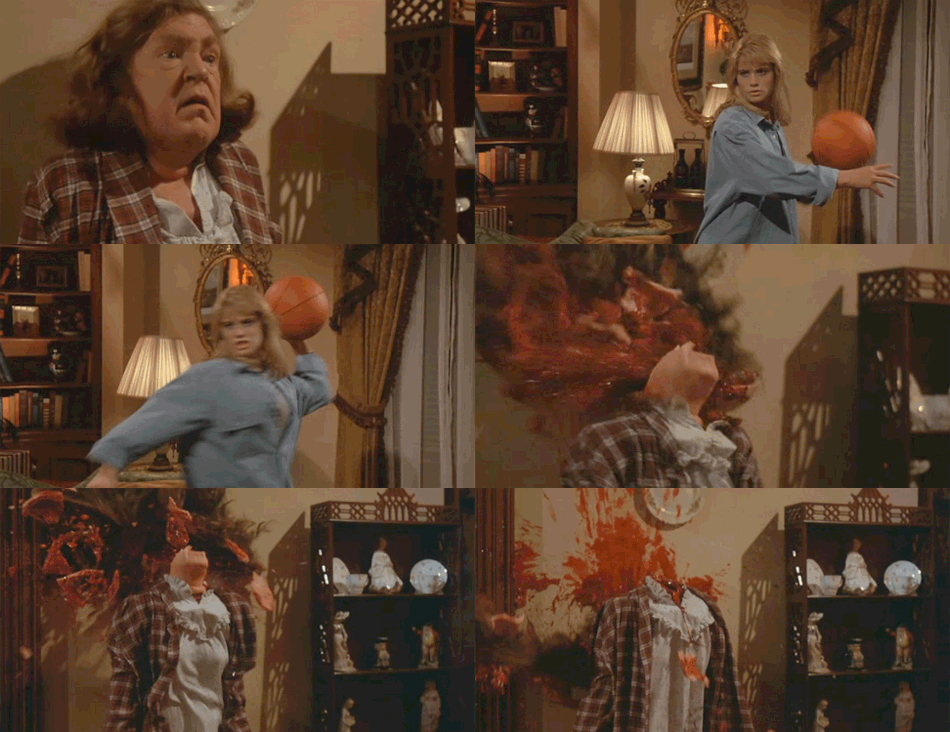
A face only a mother could obliterate.


And the film does take on the abortion issue with a vengeance. Quite literally when the aborted fetus returns armed with a knitting needle. But when Virginia ultimately regrets her decision and attempts to rescue the fetus from a back alley dumpster, she's greeted by a homeless gimp on a skateboard -- no explanation whatsoever. Never taking a side on the issues, The Unborn prefers its descent into oddball, gruesome absurdity. It's not so much pro-life as it is pro-inane.

Blink-and-you'll-miss a pre-Friends Lisa Kudrow collecting sperm samples. Apparently at this stage in her otherwise brilliant career, it hadn't been Lisa's day, her week, her month or even her year. There's also a surprise supporting turn from the likes of a pre-Suddenly Susan Kathy Griffin, on the D-List long before she made that concept famous. Kathy's a stellar stand up comic, and even with her penchant for sick humor, I've never heard her speak of playing this role as the teacher of a man-hating, lesbian birthing class who is bludgeoned by her lover with a telephone. It's pretty evident Kathy's calling was for stand up, where the laughs are at the expense of others.


And that's basically what to expect when you're expecting. The Unborn is a film that holds its B-movie origin close to the chest, embraces it warmly, and then gives it a little shake just for good measure. Ill-conceived? Maybe. Raised under questionable guidance? Most definitely. And it grows up to be a big freakshow you're embarrassed to introduce to your friends. Even so... this baby's still on board!