Showing posts with label Virgin Viewings. Show all posts

Thursday, August 8, 2013

BEST OF 2013: Virgin Viewings (Part One)


Here's a list of some of my favorite non-2013 viewings of 2013. Do with this what you will...
Except that. That's disgusting.


BEST VIRGIN VIEWINGS OF 2013 
(PART ONE)


"What happened to Ena and Geraldine 
and Muriel and Rita and Ethel at 10 Rillington Place?"

- 10 Rillington Place (1971)
Directed by: Richard Fleischer, Written by: Clive Exton

Overlooked is an understatement. Sean Durkin, director of the haunting Martha Marcy May Marlene, recently cited this in an interview as one of his favorite unsung films. A chilling true crime classic about serial killer John Reginald Christie that guarantees I'll never see Richard Attenborough in quite the same way. Like Polanski or the more recent Sleep Tight, it's a terrific "apartment thriller" that ensures no one dare rely on the kindness of strangers. Dark, dastardly, and deserving of a major rediscovery.


"It's time to feed the baby."

- Baby Blood (1990)
Directed by: Alain Robak, Written by: Serge Cukier & Alain Robak

A circus performer finds herself home to a primal, bloodthirsty being and seeks to feed the monster within. Like a combination of Frank Henenlotter's Brain Damage with Abel Ferrara's Ms .45, led by  a performance from Emmanuelle Escourrou that fuels frenzied flashbacks of Isabelle Adjani's Possession. Sick, smart and satisfying. And apparently there's a sequel?!


- Bad (1977)
Directed by:  Jed Johnson, Written by: Pat Hackett & George Abagnalo

NYC housewife Hazel (Carroll Baker) does two things extremely well: electrolysis and executions.  She can have them both done in under an hour... with only minor irritations. A Warhol-produced gem with a similarly whacked-out wit to Paul Morrissey's Flesh Trilogy, dosed with the deliciously bad taste of John Waters (its Trash meets Serial Mom!) The baby toss is a true classic.


"We're gonna need a bigger basket!"
 
- Basket Case 2 (1990)
Directed and Written by: Frank Henenlotter

The films of Frank Henenlotter were undoubtedly among my year's most fruitful of finds. It's a small filmography but an unforgettable one. This sequel is a perfect showcase of his trademark insanity, with just the right amount of cleverness and reliance on character. Duane and Belial are back, side by side, alongside a wealth of new freaks and weirdos. The effects are both crude and astounding, and its story is both surprisingly sentimental and off-the-rails demented. A superb horror comedy and an even better sequel.


- Blind Beast (Moju) (1969)
Directed by: Yasuzo Masumura, Written by: Yoshio Shirasaka

An artful, disturbing classic about a blind artist who abducts a female model to his remote warehouse, along with his overbearing mother. They each mold and sculpt their motivations until...

...Well, that's all I'd care to spoil about this one. It's best to savor its sadistic sensuality just as our lead characters do. (Hint: Boxing Helena is like the UPS standard postage version of this one).  It's unexpectedly stylish with an audacious setting and uniquely adult themes. It cuts deep.


"After Harry Joy dropped dead... 
His life was never the same again."

- Bliss (1985)
Directed by: Ray Lawrence, Written by: Ray Lawrence & Peter Carey

Sort of an Aussie-American Beauty as we follow a man's humdrum suburban life and impending, fantastical death. Harry Joy's existence extends to more surrealist extremes than Lester Burnham's, but he struggles with a similarly disdainful wife and disappointing children (in this case his son's a Nazi who's fucking his daughter in exchange for drugs). Harry Joy must come to some sense of acceptance, understanding, maybe even... joy. There's gloriously oddball imagery throughout and an imaginative sense of humor (an underwater Jesus figure vomits up an eel, daughter's chest opens to roaches), even when the film takes some less blissful detours. It's a real curiosity with some crisp, sensational moments.


"Mum won't like it! But the kids will!"

- Bloody Birthday (1981)
Directed by: Ed Hunt, Written by: Ed Hunt & Barry Pearson

Evil kid films are rarely this fun, nor ensemble-themed. Three 10-year-olds born during a solar eclipse turn on their community, toting guns and taking names. It's totally not-PC, and thus, a total delight. One scene involving a little girl's voyeuristic revenge on her big sis (played by Julie Brown) is reason enough to celebrate this one annually.


"A seduction. A mystery. A murder."

- Body Double (1984)
Directed by: Brian De Palma, Written by: Brian De Palma & Robert J. Avrich

In part to cleanse my pallet after seeing De Palma's latest, Passion, I sought out this messy meta delight. It reminded me that De Palma was always a bit awkward when it came to showing sex (that beachside embrace!?!, Holly Body's "seduction"!?!), but that he's a true master of showing desire. Basically a negligee-clad, Hollywood-set Rear Window, De Palma's film is like Hitchcock, accent on the "cock." Sleaze and sensational style, with just enough meta playfulness to cover its gaping plot holes. The chase through an upscale mall and a tense dual-story drilling are absolute marvels of craft and compulsion.  Body Double came at a time when De Palma still had a massive hard-on for the movies.


- The Boxer's Omen (Mo) (1983)
Directed by: Chih-Hung Kuei, Written by: On Szeto

A major cult curiosity you should watch with your most dear, most inebriated friends. This Shaw Brothers Production manages to combine kung-fu with the eye-searing, opulent surrealism of Alejandro Jodorowsky, and the shlock gore of Lucio Fulci. Deliriously trippy and endlessly bizarre, it's a true feast for the eyes of the utterly insane.


"The movie that will blow your mind!"

- Brain Damage (1988)
Directed and Written by: Frank Henenlotter

Seemingly an oft-ignored 80's horror comedy and another solid reason to add Frank Henenlotter to any list of the genre's most genius, madcap directors. Zany effects, tight scripts and a strong sense of subtext, this might even be his most socially relevant -- addressing sex, drugs, disease and addiction in the uniquely plagued era of 1980's New York City. There's even a heavy gay subtext going on here, but it's all mere underpinnings to a real headtrip of a horror film. The bug-eyed, brain-munching Aylmer is another of Henenlotter's highlight contributions to the genre, accompanying some of the most mindblowing imagery in his own career.


"Pretty Sally Mae died a very unnatural death!
...But the worst hasn't happened to her yet!"

- Deranged (1974)
Directed by:  Jeff Gillen & Alan Ormsby, Written by: Alan Ormsby

A perfect companion to Tobe Hooper's classic The Texas Chain Saw Massacre. Both films were released in 1974 and received their inspiration from necrophilic interior decorator/serial killer Ed Gein (in this case, "Ezra Cobb"). They share a pitch black sense of humor and some seriously unnerving scares, although Deranged is the more "true-to-fact" and admittedly less terrifying of the two. Actor Roberts Blossom actually makes a surprisingly compelling and comical lead, and the film's flirtation with tones allows for an equally effective true crime story, black comedy, and grindhouse chiller. One sequence involving a flat tire stands out, in particular, as being truly chills-up-the-spine frightening. It's funnier and smarter than expected. Way creepier, too.


"At first it was just a game..."

- Don't Deliver Us From Evil (1971)
Directed and Written by: Joel Seria

Fans of Heavenly Creatures take note. Inspired by the very same diaries that gave us Peter Jackson's masterpiece, Don't Deliver Us From Evil tells of the intense friendship between Anne and Lore, two schoolgirls who've formed an intimate bond that spirals dangerously out of control. Even moreso than Jackson's film, Evil is steeped in the horror genre, but is equally swept away by something more grand and romantic. In this adaptation, Anne and Lore pledge their lives to Satan. They start fires, kill small birds, and toy with the lives of others who stand in their way. The similarities come often, and while the end result is something quite different from Creatures, it's still wholly satisfying. The ending is a real crowd-pleaser.


"If you do... then don't say we didn't warn you."

- Don't Go in the House (1979)
Directed by: Joseph Ellison, Written by: Joseph Ellison, Ellen Hammill & Joe Masefield

One of the nastiest slashers in memory, it conjures thoughts of Deranged, Maniac, The Prowler, and countless other killer P.O.V. tales with their own signature stamps of brutality. Donny Kohler, victim to decades of abuse by his sadistic mother, decides to take a trip down memory lane. He invites young women into his home and offers them a warm seat by the fire. Home just happens to be a morgue, and that fire just happens to be from a flamethrower. Some unexpected detours and mean-spiritedness make this one stand out from the pack. A scene involving a double date at the discotheque is worth the price of admission alone.


Up Next:  

Virgin Viewings (Part Two)


Monday, December 17, 2012

Virgin Viewings 2012: Fun with Fascism


More of my favorites discoveries of 2012, new and sometimes very, very old...


I'd already become enamored with the films of Rainer Werner Fassbinder prior to this year. Smart, satirical, stylish and soulful... Even socially conscious. With his reputation for being controversial, progressive and astoundingly prolific, it's like constant revelation moving through Fassbinder's filmography. He died at age 37 with approximately 40 filmed works as director, actor, writer, producer, designer, editor and camera man. A bold visionary at the head of New Wave German Cinema, Fassbinder lived fast and died young, and his films reflect that with a relevance and human understanding that's unmatched.

Often mimicking and desecrating the old Hollywood tropes, Fassbinder's career might seem intimidating at first glance. The knowing artifice in the acting, the minimal sets, the precise compositions and staging... Social politics in West Germany and the perils of fascism... I'm sure many assume they're pretentious, or stilted even. To the contrary Fassbinder's films often prove that poignancy and politics can go hand in hand. He consistently and carefully constructs small character stories within the grander schemes -- proving a masterful ability to marry the intellectual with the emotional. As any of Fassbinder's conflicted characters would tell you, it gets mighty difficult to discern matters of the head from matters the heart.


It's odd then that it was Fassbinder's last film, Querelle, that marked my first foray into his work. One of his most detached and least accessible on some level, even if it's his most immediately enticing. A surreal gay fantasia involving sexy sailors played by Franco Nero and Brad Davis in that tiny white shirt...  It's a movie that fills all of my cinematic desires as perfectly as... Brad Davis does that tiny white shirt.


But I'd go so far as to say Querelle is one of Fassbinder's weaker films, only in that it downplays his real gift for compelling character drama and powerful plot turns. Much to my surprise, I found myself in better company with the lethargic lesbians of The Bitter Tears of Petra Von Kant. Then onto the depressingly personal and theatrical In a Year with Thirteen Moons, Fox and His Friends, and the bittersweet, ageless love story of Ali: Fear Eats the Soul -- perhaps Fassbinder's most accessible and widely acclaimed film.

The man has made so many impeccable works of art - of every variety - and they're each so singularly fascinating, so singularly... Fassbinder.

Among my 2012 Fassbinder revelations...

MARTHA (1974)


Drama, psychological thriller, dark comedy... Whatever you want to call it, Martha is first-rate. A TV-movie that has the nerve to approach sado-masochistic relationships with the very same approach to it's audience. A timid spinster finds herself falling for a cruel man -- their sick bond unraveling with nervous tension and pitch black delight. It's brittle, funny, and just brutal at times. I often debate (with myself, of course) over which Fassbinder leading lady is my favorite. I'm tempted to give the edge to Margit Carstensen, remarkable here as a woman who's purely sympathetic and tragically pathetic in each extreme. And Karl Heinzbohm impresses as another disturbed sadist that could rival his own Peeping Tom. The sun tan scene, in particular, is one for the books.


WORLD ON A WIRE (1973)


I'd already rank this humbly among the best science fiction films I've ever seen. A riveting small-scale TV thriller that has the boldness and brains to rival something as big and bombastic as The Matrix. The films vary completely in approach but touch on a lot of the same themes -- questioning reality while dissolving such a notion entirely. eXistenZ would make a better companion, following an engineer seeking the truth within an alternate reality system known as Simulacron. It's all food for thought and there's plenty to chew on with its four-hour-plus runtime. Through its captivating and complex retro-future chic, it ends up feeling like necessary sustenance. It was ahead of its time and no less valuable today.  Once again carefully composed through glass and mirrors, World on a Wire is elegant, multi-layered, and worth every reflection.


THE BRD TRILOGY:
The Marriage of Maria Braun (1979) 
Lola (1979) 
Veronika Voss (1981)


Taking cues from Sirk and Sunset Boulevard, this dense, diverse trilogy follows three female characters alternately climbing and crushed under a capitalist system. The title refers to the Bundesrepublik Deutschland and then volatile state of West Germany, but these characters struggles with power, corruption and the heart's compulsion, feel entirely relevant to the western world. There's endless artistry in the melodramatic ache of The Marriage of Maria Braun, the vibrantly colorful allure of Lola, and the thrilling but sad destruction of Veronika Voss (in sparkling and stark black-and-white). Each film blends smart social commentary with stylistic reinvention and humor. Passionate power plays that also double as political statements. Much like the ladies who lead these revolutionary films (Hanna Schygulla, Barbara Sukowa and Rosel Zech), they're brash, beautiful AND they've got something to say.


I graciously have a wealth of Fassbinder's career still to uncover, but there are a few more I've had the pleasure of discovering in 2012, ones fans should seek out eventually... Most notably The Third Generation (1979), a scathing and absurd comedy about terrorism, the bleak black comedy of Why Does Herr R. Run Amok? (1970), the bizarre fascist family game of Chinese Roulette (1976), desperate housewife turned communist in Mother Kusters Goes to Heaven (1975), revisionist camp western Whity (1971), and the comically oddball Satan's Brew (1976).

Monday, December 10, 2012

Virgin Viewings 2012: Save Judgement for the Apocalypse


A glimpse at my favorite discoveries of 2012, new and sometimes, very very old....


MOST UNDERRATED: 
THE RAPTURE (1991)


Mimi Rogers is a marvel in this shockingly underseen drama about Sharon, a call center operator in Los Angeles who finds herself on the receiving end of a greater calling in life. Sharon's arc is one of the most fascinating and unsettling I've seen in some time, dropping her "hedonist" lifestyle for Christ's undying love... and perhaps the end of times. God and director Michael Tolkin don't let you off easy. Clever, bleak and challenging, it's rich material that seeks to rattle believers and non-believers alike, building to a climax that leaves viewers in their own conflicted purgatory. I have newfound belief in its creator, and Rogers is an absolute revelation. As for God... we'll talk when the time is nigh.


MOST UNEXPECTED ENDING: 
NEXT OF KIN (1982)


For the majority of its runtime, Next of Kin builds a stylish, encompassing mood... and a notably sluggish pace. I kept waiting for the real horror to unfold. When it did, I wasn't prepared. And I'm not talking about "the reveal" which, to be honest, is a muddled memory at best. But the climax shifts gears so miraculously into a scene straight from Italian horror that I was totally smitten. Our lead girl finally fends of the psychopaths as the camera suddenly seems to unhinge, turning the film's slowly revealed setting into one grand setpiece like the lost scene of a Dario Argento film. It also conjures Picnic at Hanging Rock with its stark Aussie setting, actor John Jarratt on the sidelines, and stunner aerial shot of one survivor's screams of hysteria. It's all too brief but remarkable. And the film continues to go off from there to another explosive finale spurred by the careful construction of a sugarcube tower. Succumb to the slow build and STAY for the spectacle.


BEST BREAKTHROUGH DIRECTOR: 
JEAN ROLLIN

I'd stopped and looked into the well of Jean Rollin once before. I didn't look deep... but then neither did his films. The clips I'd seen had acting more wooden than a stake and seemingly less of a point. I trusted the atrocious DVD artwork to accentuate his sole worth being in red corn syrup and sapphic lust... Then, in the depths of boredom, I took a second look.  And somehow... I found myself falling into it. The somnambulant poetry of it all. I was seeped into the atmosphere and... by god the ATMOSPHERE!

I drank the water, kids... And then I got DRUNK.


With its own languorous mood and melancholy, Rollin's worth is far from the tit-centric Troma flicks I'd been dreading. Time, plague and parasite feed on the supple flesh of female. An erotic meld of sex and death, philosophical and existential meditation, and some pretty shocking bits of horror. The production value is surprisingly solid, given the macabre ambiance of the many real world Gothic locales. Castles and cemeteries so grim and so perfect, they immediately transport and transfix you. Like Mario Bava on micro budgets, it's horror by way of hypnosis.


For those like I who cried, "Don't drink the WATER!" ... I offer two recommendations. The Grapes of Death and The Iron Rose are two solid examples of Rollin's worthwhile visionary. Both lack in his "trademark" lesbian bloodsucking in lieu of more abstract tales of terror. The Grapes of Death is a fresh take on the zombie formula following an infection as it spreads through a remote village, leaving its townsfolk still aware of their own vile actions as they ravage and dismember. It's slow burning yet still packs a memorably grisly punch. The Iron Rose is an altogether different sort of horror film, following of a couple's odd overnight dance with death in an unforgettable cemetery setting. It's all but a foggy fever dream you can't help but get lost in. There IS a sense of storytelling amidst all the lurid shlock, and a stirring sense of surrealism Rollin is able to capture time and again. And, yeah, some hot and bloody girl-on-girl action, too.


(Also for the curious: Lips of Blood, Requiem for a Vampire, Shiver of the Vampires, Fascination)

More 2012 favorites to come...

Friday, December 7, 2012

Virgin Viewings 2012: Douglas Sirk and the Hollywood Heartache


A glimpse at my favorite discoveries of 2012, new and sometimes, very very old...


Douglas Sirk is a known cinematic master for his tales of instantaneous, requisite love and its tragic undoing. Due in part to this beautiful but cruel world and - far more cruel - characters own ugly needs and desires. Beyond the shimmering surfaces lie tales of stifling, rigid order, and matters of the heart too messy and cold to be shot in anything less than glorious Technicolor.


It's a strange spell Sirk weaves with his grand visual palettes, classic stars, and all those tawdry, teary-eyed revelations... Pure melodrama at its finest, and graciously, too, not without its "camp" value. Take for example the scene in Imitation of Life when Sarah Jane, a moody mixed-race teen who just wants to be white, is slapped mercilessly by her white boyfriend to the sounds of swingin' jazz. It's hard not to laugh at the odd, arch tone, yet it doesn't detract from the overall "tearjerker" status. I still shed a few watching Sarah Jane's self-destruction take its devastating, ironic toll on her poor, devoted, slowly dying mother. (And the MUSIC SWELLS!!!!) For all of the big story calculations, small and glorious subtexts consistently hover just outside the many blue, moon-swathed windows these characters so often gaze from in wrenching heartache.


In Written on the Wind, nefarious nymphet and scene-stealer, Marylee Hadley, does a solitary dance of seduction offset by her father's fatal fall down the family staircase -- ruined by the revelation that his son's a drunken lout and his daughter's being pumped more than his oil well. Dark, campy, bold and beautiful, it's moments like these that have seared themselves to my eye sockets. Sirk's best films blend idealistic imagery (and colors that POP) with emotional turns that magically tear through the artifice, bearing something almost depressingly human. He'll have you believing in the rapturous power of love and then cursing it to the Technicolor heavens that... just won't allow it.

(All That Heaven Allows is also, of course, requisite viewing for any fan of Todd Haynes' Far From Heaven or Rainer Werner Fassbinder's Ali: Fear Eats the Soul -- their joint inspiration. Each of them an eye-popping, soul-crushing masterpiece.)

Wednesday, June 29, 2011

Virgin Viewings: Not Undead In Bed


L.A. Zombie (2010)
"written" and directed by Bruce LaBruce

Times are HARD on the Boulevard.


Well fuck my still beating heart... I don't often find myself reviewing art/gore/porn films. Nor films wherein a still beating heart is liable to get fucked. Never doubt the curiosities of current filmmakers. Mildly-notorious queer moviemaker Bruce LaBruce is back with his unique cultural commentary by way of hardcore sex and splatter. My commentary: there's no way Francois Sagat would be homeless in LA for long. He'd quickly be cast in a film much like this one.

"When there's no more room in hell, the dead will walk..."
Sunset Boulevard with their dicks out.


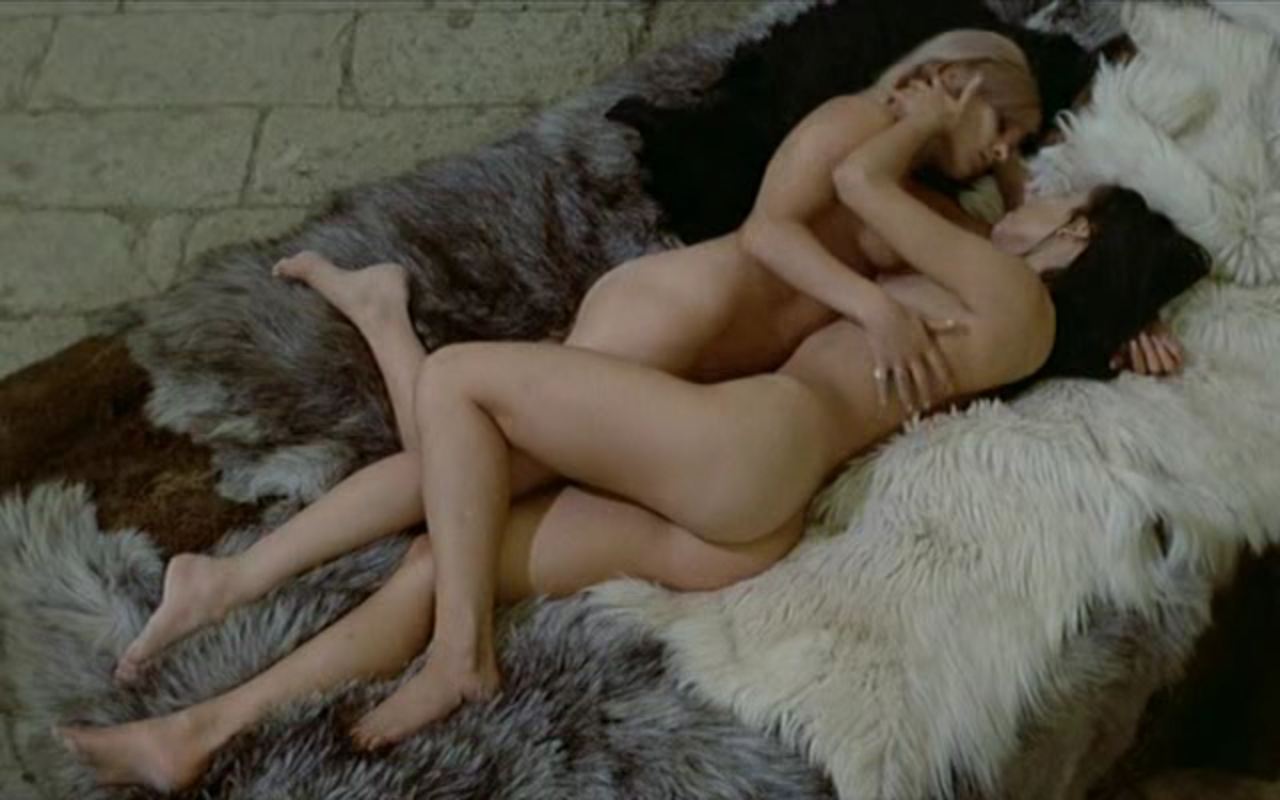
Adult gay film thespian Francois Sagat stars as a schizophrenic homeless man with washboard abs and a tattooed skullcap left adrift in the City of Angels. Believing himself to be a zombie (alien? demon?), Sagat feels free to consume amidst all the vast concrete consumerism. Crash victims, corrupt businessmen and the shanty town homeless... No one is spared LaBruce's sideline commentary or Sagat's undead violation. In the spirit of Romero's Dawn of the Dead, replacing its Monroeville Mall setting with a soiled mattress in the LA River. Social satire cum actual cum shots. Deep penetration with illusions of going deeper. Truth is it might just be about a really hot homeless man having sex with corpses. Or a film about Francois Sagat walking around LA with a boner and grumpy face.


For LaBruce it seems a "pointed" film and thus so is Sagat's demon/zombie member that spews blood upon climax. It's more playful fetish material for those who thought the Nekromantik films were lacking in explicit gay sex (I know I did) and some nods toward topical issues. It certainly begs the topic of what makes for sufficient erotic material. Plenty of members, some of them dismembered.


This is all for arousal but equally a critique of that. Protruding fangs and genitals airbrushed in aqua makeup, soaked in plasma. You haven't seen this many open wounds being pounded since David Cronenberg's Crash. Beautiful men with fresh gaping holes, although some of them bloody and caused by bullets, in your garden variety XXX porn scenarios. But an admirable variation has its hot and sweaty scenes take place outside the auto shop and inside the cardboard box of a dead homeless man. Socially conscious gay porn.


Erection, revulsion, pretension, repeat. The obvious visual appeal is spread evenly with all things repellent. Yet perhaps that's the point of all this for Bruce LaBruce -- other than having a more legit reason for Francois Sagat hanging out naked on set. If you're busy flogging, his films would like to flog back.

Tuesday, October 12, 2010

Love and Other Hardcore Drugs


Virgin Viewings for September


ENTER THE VOID (2010)
directed by: Gaspar Noe
written by: Gaspar Noe, Lucile Hadzihalilovic

Oscar (Nathaniel Brown) dies during a botched drug deal in Tokyo while dosing on DMT. Life and death flash before his eyes as Oscar tries to hold on to a childhood promise made to his struggling sister, Linda (Paz de la Huerta).


According to the Tibetan Book of the Dead, when you die you float above your life in an astral sort of abyss. If you plan on dying in Tokyo, make sure you're not epileptic. Gaspar Noe's latest stylistic descent, Enter the Void, is a deliriously vivid look into everything from birth to death, to everything before, after or inbetween.


It's cyclical, seizure-strobing, arthouse entertainment that takes great leaps in technical innovation to tell a rather simplistic story, all through the grandiose scope of the existential. As visually vibrant as its characters are dim, Noe's film feels like that rare feat of cult filmmaking with the budget to match its stoner-influenced audacity. It's a full-fledged cinematic experience of the variety I haven't seen since David Lynch's Inland Empire; another work so immersed in its own trippy wavelength that it serves up marvel and annoyance in equal measure (although Noe's film is notably more straightforward -- glowstick genitals, cumshot POV's and all). I was witness to several walkouts at my screening (and several walk-ins upon the sound of orgasm), as well as people bracing their heads between their legs as the strobe white flickers forced them to pretend to be tying their shoelaces over and over again. That certainly didn't happen when I saw Inception, a film that most seem to praise as the year's biggest headtrip. Where Inception has to tell you that you're in a dream (...and tell you ...and tell you), Enter the Void trips, floats, freefalls, glides and penetrates the dream state head on.


It's a bit like 2001: A Space Odyssey's visionary trip to Jupiter, accompanied by a pipe and an erection. Noe's collision of imagery and sound is utterly spectacular as it hovers through all sorts of existential dread. Even the opening credit sequence outdoes most feature films in its pure cinematic assault. It's all so fluid, innovative and abrasive, that it's like a psychedelic rollercoaster diving into an oncoming truck, or an airplane mid-flight. Even at its most repetitive (there's a whole lot of soaring between lights, and Paz de la Huerta sounding raspy and bored), it has a cumulative tenacity and aura that is simply unforgettable. Destined for stoner cinephile infamy, Enter the Void is pure cinema that I'm oh so happy to inhale.


Even with his penchant for plummeting headfirst into grim material such as rape, abortion, murder and incest in films like I Stand Alone and Irreversible, I still consider this statement to be the most shocking thing Gaspar Noe's ever done:

Do you have any American actors you'd want to work with?

I guess just the ones who are my friends. The last one I saw was really pretty... what was her name... Kristen Stewart, the one who was in "Twilight." She has such an expressive face.

Like a fire extinguisher to the face, that's bold and shocking!


Life, Liberty, and the Pursuit of Orgasm


CRIMES OF PASSION (1984)
directed by: Ken Russell
written by: Barry Sandler

Clothing designer Joanna Crane (Kathleen Turner) sidelines as a prostitute names China Blue, who becomes savior to a bitterly married man (John Laughlin). Meanwhile a maniacally obsessed reverend (Anthony Perkins) wants to be China Blue's client, savior, and ultimately her killer.

Love is...
never having to say you're seeking sex
outside the marriage.


Something akin to Eyes Wide Shut on poppers, Ken Russell's Crimes of Passion is a unique satire of relationships and American sexual mores. It's erotica at its most repugnant, equal parts fascinating and dull, clever and ill-conceived. Inbetween China Blue's business transactions are inserts of the Kama Sutra, even a short film featuring a wedded couple, their skeletons and caged birds. It's either an artistically charged meditation on love and sex that has been dunked in smut, or it's just smut with artsy pretensions. Either way works, but I'm not sure this film does completely. Then again, I'm not sure I'd have it any other way.

Russell's film (as should be expected) is bonkers. It's an ode to warped desires that has the gall to once again humiliate Anthony Perkins with an ugly wig and a dress, and a doctor's bag of sex toys that includes a vibrator esteemed for its ability to give less pleasure than pain. Perhaps it's best not to detail Kathleen Turner's use of a nightstick on her cop clientele, or Perkins fucking a blow up doll until it bleeds. The mere fact that I can even mention a film with such scenes is reason enough for this one to exist.


What a world of respect I have for Kathleen Turner, who has plenty of sordid fun with her role, from her soulful speeches as Miss Liberty, to her petrified popping of bubblegum. What a wealth of varied delights through her filmography as well -- from sexpot (Body Heat) to savage (War of the Roses), sociopathic (Serial Mom) to stifled (The Virgin Suicides). Crimes of Passion gives her plenty to play with, both in terms of delicious dialogue and dirty deeds, and Turner is one of the few actresses I could imagine would be game.

Love interest John Laughlin is charming in a bland, I've-forgotten-everything-about-the-man kind of way. Their love story is supposedly profound, but only given the fact that China's clearly whacked and Laughlin's wife (Annie Potts of Designing Women!) is a one-note icy bitch. Perhaps it's because Laughlin's lack of personality has been nicely veiled by his nice, athletic figure. His "Human Penis" party gag alone is reason enough for his wife to divorce him. It really is the perfect way to say to your friends, "My wife and I have a miserable, sexless marriage, and I'm a walking hard-on!"


And Anthony Perkins as Reverend Repression... oh how he does sexually disturbed psychos proud. If once we were led to believe he would never harm a fly, we now can't help but believe he's a closeted transvestite nutjob. That we can have faith in.


Ken Russell's directorial hand is both deft and clumsy, maybe intentionally so. For every sharply written scene and stylistic flourish, there's a humdrum commentary on marriage, or a hideous synth score by Rick Wakeman (think Civil War anthem on Casio keyboard) to bring it right back down the ladder. I can't help but admire it all the same in a very sick, senseless way. It's often called a masterpiece, and I'm fine with such acclaim being heaped on anything this debauched. Like a stroll through the red light district, it's a curious detour that makes you feel both titillated and gross. But like any marriage, it definitely hits some rough patches.